
A Starlink satellite, pictured in 2025. Photograph courtesy of Wikimedia Commons.
‘As Canadian as possible under the circumstances’: CRTC official questions digital sovereignty pathway at CRRBC
Regulatory | |June 10, 2026
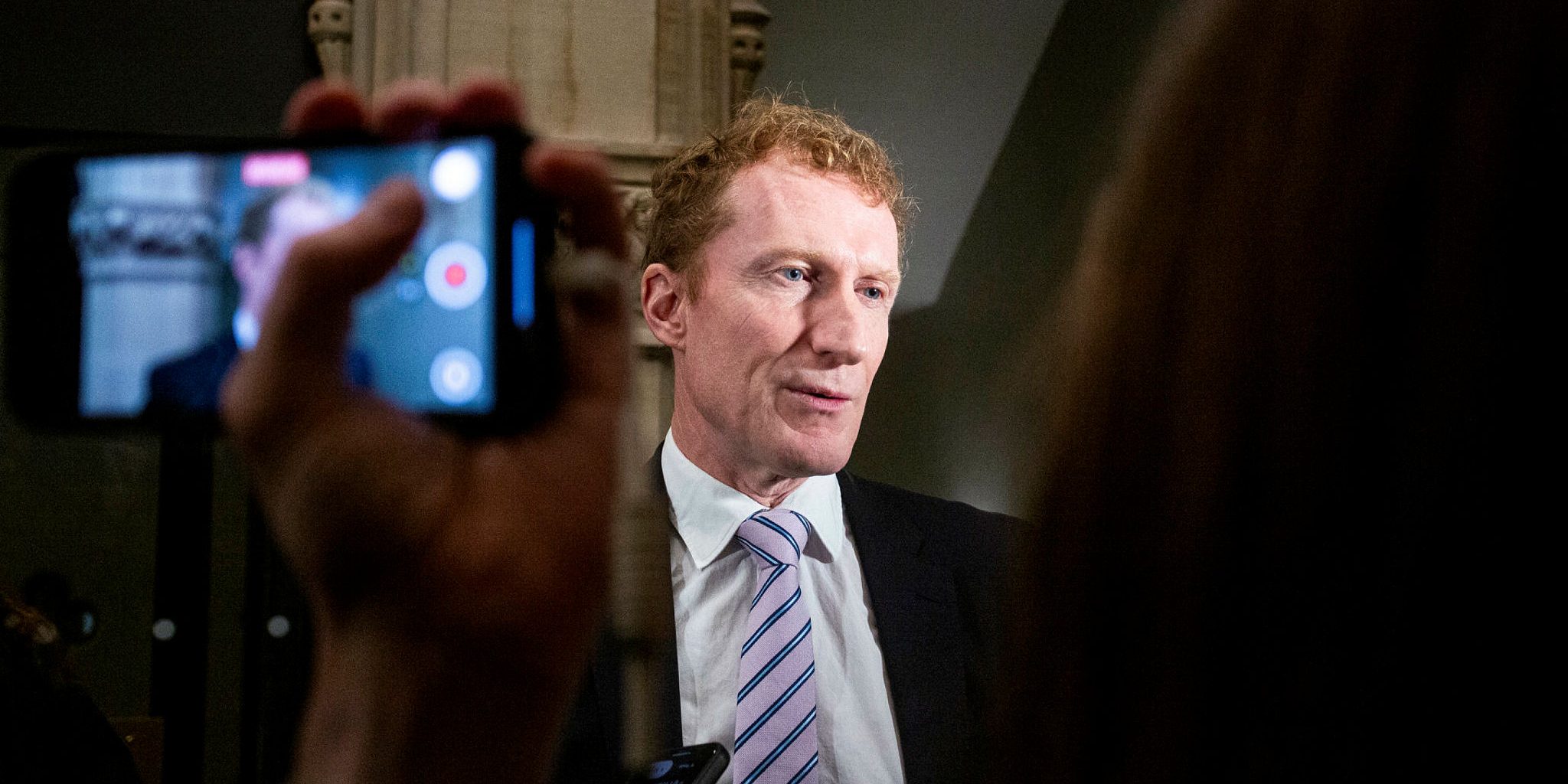
ORILLIA, ONT.—At Canada’s preeminent rural broadband conference, Ontario’s CRTC commissioner challenged attendees with a question — can Canada actually achieve full digital sovereignty?
Bram Abramson framed sovereignty as a worthwhile, if somewhat abstract, objective. He questioned what Canadian policymakers are actually pursuing when they prioritize sovereignty, and whether the notion is even feasible.
“You look at the world of internet, and you think of where we were with the web in the early 2000s, and now it’s sort of oligopolized,” said Abramson during a panel discussion at the Canada’s Rural and Remote Broadband Community (CRRBC) summit on Wednesday. “What’s telecom going to look like?”
“And what does that do to our public policy objectives? How do we think about sovereignty in that context?”
The questions, while rhetorical, sat lingering at Casino Rama in Orillia, Ont.
For his part, Abramson invoked a CBC contest organized in 1972 to find an equivalent saying to, “as American as apple pie.”
The winning entry?
As Canadian as possible, under the circumstances.
Abramson suggested the adage encapsulated Ottawa’s pursuit for digital sovereignty, especially as foreign-owned low-earth orbit (LEO) satellite operators bring connectivity to projects to rural and remote parts of Canada .
“For so many years, the conversation was about how we get more foreign investment to Canada,” he said. “Now…, one of the key questions is going to be: if everyone has access to LEO, is that enough?”
“Does it mean that we can now start treating these large, U.S.-owned entities as our carriers of last resort?”
For reference, foreign entities were prohibited from fully owning Canadian telecom providers until legislative changes were made in 2012. Currently, the CRTC’s mandate, as governed by a law passed by Parliament, includes promoting ownership of Canadian carriers by Canadians, promoting the use of domestic transmission facilities, as well as protecting the privacy of individual Canadians, all of which he said had ramifications for digital sovereignty.
Meanwhile, among the most popular LEO offerings in Canada is Starlink, owned by Space Exploration Technologies Corp. (SpaceX), which is led by Elon Musk, the former member of President Donald Trump’s administration, who has publicly called for Canada to become the 51st U.S. state.
Amazon.com Inc., owned by billionaire Jeff Bezos, is also preparing to launch its own direct-to-consumer LEO constellation, set to become available later this year. Elsewhere, the Canadian company Telesat Corp. is readying its Lightspeed constellation for launch, though the service is not expected to be directly available to consumers.
The federal government has suggested LEO satellite will help bring internet connectivity to Canadians living in remote regions. As first reported by The Wire Report, Ottawa will not renew its multi-billion-dollar Universal Broadband Fund, which supports fibre and fixed wireless infrastructure projects across the country, as the Liberals embrace LEO as a last-mile solution.
Sam Oosterhoff, Ontario’s associate minister of energy-intensive industries, also said the provincial government is “technology agnostic” and open to LEO projects during a fireside chat with The Wire Report.
Oosterhoff, whose government paid to rip up a $100 million contract to bring internet access to northern Ontario under Starlink, citing disagreements with Musk’s public comments, was scheduled to meet with Amazon officials later on Wednesday.
When asked, Oosterhoff said he “wouldn’t speculate” about whether Ontario could pursue another large-scale deal with a single satellite provider to bring connectivity to the province’s remaining unconnected communities. He also wouldn’t disclose how much Ontario Premier Doug Ford’s government paid Starlink to terminate the contract, indicating it’s confidential information.
“What a flip that is,” said Abramson. “From requiring all carriers to be Canadian to saying the backstop to the whole system is Elon Musk or whoever.”
Essentially, Abramson asked whether a system in which any Canadian’s internet access is completely reliant on U.S.-owned enterprises could ever be considered truly sovereign.
“I’m guessing the answer will not be that LEOs are off limits because they’re an affordable way of moving bits, but what does that look like?” he asked. “What is acceptable and workable as a backstop, and what conditions can you put around it?”
“There’s a lot to come, but I think it always goes back to, ‘as Canadian as possible, under the circumstances,’ and I think that’s exactly right.”
Similarly, James Wan, a senior director at the Canada Infrastructure Bank, said there’s no “universal definition” of sovereignty, but it can refer to where data is located, how it can be used, and who can access it.
“It also involves data flow, and whether some of that data flows into foreign countries that might be able to read and gain access to it,” said Wan during the panel. “I think there’s different ways to protect these two elements through ownership, governance, [or] the tech stack.”
“It could mean standing up more sovereign capabilities, perhaps in technologies like satellites, [but] there’s many ways to achieve this and it’s not black-and-white whether you’re sovereign or not.”
Abramson also pointed out some potentially latent hypocrisy in Wednesday’s discussion, as the back-and-forth on sovereignty took place at the main entertainment centre in Cason Rama, an Indigenous-owned institution located on the Chippewas of Rama First Nation.
“How ironic is that, here we are at Rama First Nation talking about sovereignty,” he said. “Jeez, we don’t feel like we have our sovereignty? It’s kind of uncomfortable.”