Home Page Regulatory Telecom Broadcast Court People Archives About Us GET FREE NEWS UPDATES
Advertising Subscribe Reuse & Permissions
The Hill Times Parliament Now The Lobby Monitor HTCareers
Subscribe Login Free Trial
Miller’s criticism of CRTC prompts questions of political interference
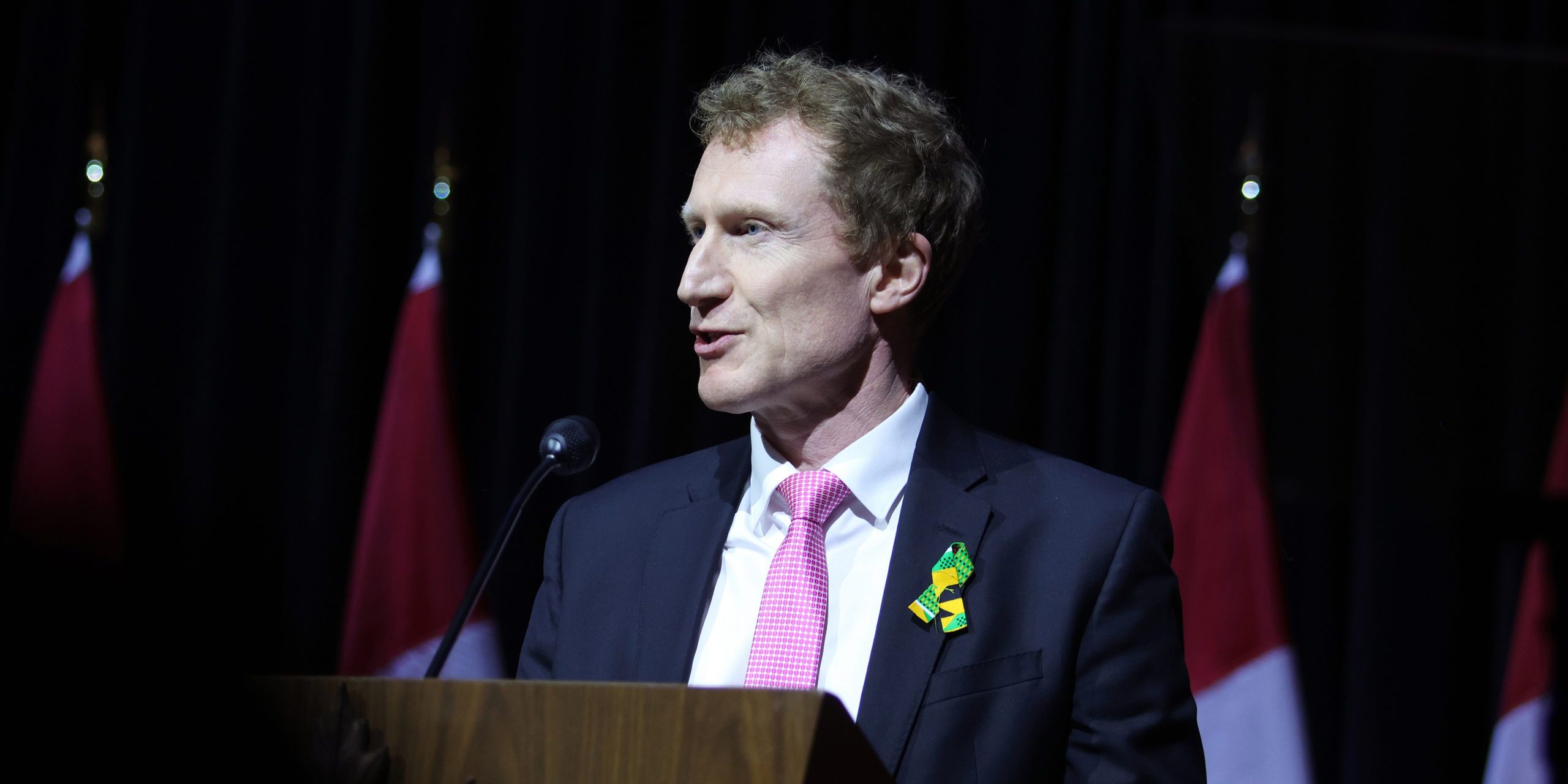
Canadian Identity Minister Marc Miller speaks at a Black History Month event on February 4, 2026 at the Museum of History. The Hill Times photograph by Sam Garcia

Miller’s criticism of CRTC prompts questions of political interference

Canadian Identity Minister Marc Miller’s recent comments about the CRTC have renewed questions regarding political interference with the independent regulator.

After Cable Public Affairs Channel Inc. (CPAC) announced it was cutting two original programsPrimeTime Politics and L’Essentiel — Miller (Ville-Marie—Le Sud-Ouest—Île-des-Sœurs, Que.) posted a statement on social media saying he was “thinking of the employees affected by layoffs” before taking a parting shot at the CRTC.

“I’m disappointed that the CRTC is not moving faster to fully implement the Online Streaming Act, a law that ensures online streamers pay their fair share.”

Carleton University professor Dwayne Winseck said the tweet was both “strange” and “troubling,” emphasizing that it contravenes the longstanding practice of cabinet ministers not commenting on CRTC decisions or processes.

“The minister doesn’t usually weigh in in public like this on a CRTC decision, given it’s an independent, quasi-judicial tribunal,” Winseck told The Wire Report. “[Miller] is the minister responsible for the CRTC and he has plenty of tools at his disposal, if he actually wants to do something.”

“Why the minister is going about it this way, it’s hard to understand.”

Miller’s tweet was an apparent reference to a CRTC order issued under the Online Streaming Act, which required large streaming companies to allocate five per cent of Canadian revenues to the development of domestic news and entertainment content.

Despite passing through Parliament in 2023, the money has largely been held up by a judicial challenge instigated by several streamers at the Federal Court of Appeal, which has yet to render a decision on the commission’s order. As previously reported by The Wire Report, some streamers have started flowing money through to eligible funding recipients, almost all of whom are waiting on the court’s ruling before making any expenditures.

However, it should be noted that it is not yet clear whether CPAC will receive any funding. The CRTC is currently considering whether to create a “services of exceptional importance” fund, after the idea was pitched by several organizations, but it is yet to be determined whether the regulator will grant their request, or if CPAC would qualify.

For Howard Law, author of the book Canada vs. California: How Ottawa took on Netflix and the streaming giants, Miller’s comments could be interpreted as instructing the CRTC to ensure CPAC receives funding.

“What Miller is saying in the tweet is assuming there is [funding for CPAC], which is, in a way, the government directing the CRTC on what to do,” said Law in an interview. “I think that if you take a somewhat correct approach to these sorts of things in terms of political behaviour, that was the wrong thing to do.”

“A lot of people might agree with [Miller], but it’s not appropriate for him to tell an independent regulator what to do with a live file.” 

But, Law continued, “it’s only a tweet.”

Winseck, who has previously worked as a special advisor to the CRTC, said it’s not unusual for cabinet ministers to use their “bully pulpit” to exert influence on private organizations, but this seems “outside” the traditional scope. 

“It implicated procedural mechanisms that general use of the bully pulpit to scold the CRTC don’t seem to capture,” he said, adding that he can’t recall any similar instance after 30 years in the space. 

Miller’s office did not immediately respond to a request for comment from The Wire Report.

Ministers not allowed to ‘intervene’ with tribunals

Cabinet ministers, along with all other parliamentarians, are bound by the Conflict of Interest Act, which outlines how elected officials can and cannot interact with arm’s-length agencies like the CRTC.

While it’s unusual for MPs or senators to comment on CRTC decisions or proceedings, several parliamentarians have found themselves in hot water for their dealings with the commission.

Perhaps most recently, ex-Conservative MP Parm Gill was subject to an investigation from the country’s ethics commissioner after he wrote multiple letters to the CRTC endorsing radio licence applicants. 

“Like ministers, parliamentary secretaries are prohibited from sending letters of support to administrative tribunals in relation to their decision-making,” wrote former commissioner Mary Dawson in 2016, finding Gill violated the Conflict of Interest Act.

Ex-Liberal MP Kate Young and longtime Conservative finance minister Jim Flaherty also got into trouble for sending similar letters to the commission. 

Michel Dupuy, who served as heritage minister under Jean Chrétien, faced calls for his resignation after endorsing a constituent’s broadcasting application in a letter to the CRTC.

In 2015, Justin Trudeau’s government released Open and Accountable Government, outlining the roles and responsibilities for cabinet ministers, which included guidelines for working with administrative tribunals like the CRTC.

“The decisions made by administrative tribunals often concern individual rights or interests (such as qualification for program benefits)… or are considered sensitive and vulnerable to political interference (such as broadcasting),” reads the document.

“Parliament’s intention to lessen or remove political influence in decision making in such areas underlies the principle that Ministers should not intervene with administrative or ‘quasi-judicial’ tribunals on any matter that requires a decision in their quasi-judicial capacity.”

It’s unclear whether Miller will face any repercussions for his social media post.

In a statement, Conflict of Interest and Ethics Commissioner Konrad von Finckenstein’s office said “it is not clear how [the] opinion expressed by the Minister could be construed as intervening in a decision.”

With files from Maria Collins

dlegree@thewirereport.ca