

Canadian Identity Minister Marc Miller speaks with reporters before the Liberal party caucus meeting in West Block on Jan. 8, 2025. The Hill Times photograph by Andrew Meade
Liberals accused of violating CRTC independence in regulatory challenge
Regulatory | |September 28, 2026
Ottawa’s request for the CRTC to review mandatory Cancon payments for online streamers represents “political interference” and risks the regulator’s independence, according to a challenge received by the commission.
Last week, John P. Roman submitted a Part 1 application, a copy of which has been obtained by The Wire Report, questioning the legality of the Liberal government’s handling of CRTC decisions made under the Online Streaming Act.
The law, introduced by Justin Trudeau’s government in 2022, sought to modernize the country’s broadcasting framework and proposed levying contribution requirements that would force streamers, like Amazon.com Inc., Apple Inc., and Netflix Inc., to allocate a portion of Canadian revenues to help produce domestic news and entertainment media.
In 2024, the CRTC established a five per cent “base contribution” threshold that would help funnel millions into Canada’s cultural ecosystem. That decision has yet to be fully implemented because of an ongoing legal dispute.
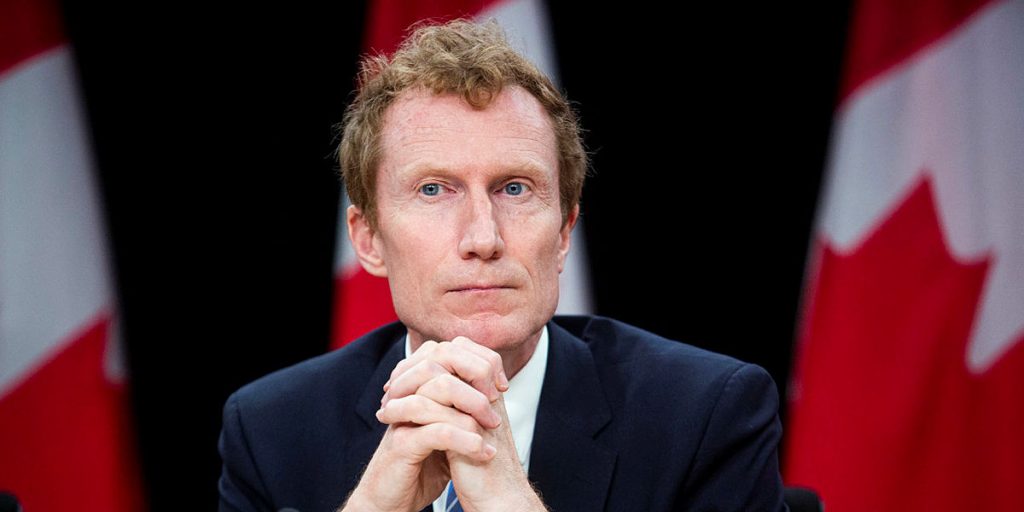
More recently, the commission upped the funding requirements to 15 per cent of yearly Canadian revenues, which faced staunch pushback from industry powerbrokers and political players on both sides of the border. Canadian Identity Minister Marc Miller (Ville-Marie—Le Sud-Ouest—Île-des-Sœurs, Que.) ordered the CRTC to “review” the decision, citing concerns that streaming companies would pass added costs onto consumers, and promised to issue a new policy direction for the regulator and replace private sector contributions with $600 million in annual government funding.
But Roman doesn’t believe the Liberals have any authority to hit pause on the CRTC’s decision.
In his application, Roman argues the Broadcasting Act only affords the federal government the ability to issue broad policy directions and order reviews for any CRTC decisions that “issue, amend or renew a [broadcasting] licence.”
“A subsequent change in the Government’s preferred policy outcome does not, by itself, establish that the Commission’s earlier decision was unlawful, unreasonable or outside its statutory authority,” wrote Roman, a self-described concerned citizen who has decades of experience in the communications space. “Nor should the Commission be placed in the position of bearing responsibility for a policy outcome that the Government subsequently determines it does not wish to pursue.”
“[The government] does not (currently) have the express statutory authority to direct the Commission to review its recent non-license related decisions.”
Liberals said cabinet has no authority to overturn decision
The application touches on legal questions raised by Liberal MPs themselves shortly before the government ordered the review of the commission’s decision.
Facing pressure from Conservative MPs to eliminate what they have called a ‘Netflix tax,’ Liberal MP Kevin Lamoureux (Winnipeg North, Man.) said it was not possible because “cabinet does not have the authority.”
Lamoureux and his Liberal colleagues later voted down a motion from Conservative MP Rachael Thomas (Lethbridge, Alta.) that sought to “reject” the CRTC’s regulatory decision under the Online Streaming Act.
Two days later, Ottawa ordered a review of the policy and many framed the decision as a concession during bilateral trade discussions with the White House. U.S. President Donald Trump’s top trade representative had previously identified the Cancon rules as an “irritant” during negotiations, which abruptly collapsed last month.
According to Roman, the federal government decided to almost immediately abandon the legal requirements of the Broadcasting Act (and the CRTC’s independence as an arm’s length regulator) in the name of “political convenience.”
“Ultimately this boils down to a question of institutional independence of the Commission,” reads the application.
“The Commission’s independence is vital for the security of Canadians, the industries they regulate, and indeed for the government itself.”
In July, Prime Minister Mark Carney (Nepean, Ont.) said Ottawa took action because the streaming decision came from “the federal family.”
“Broadly speaking, it’s an arm’s length regulator, but [it’s a member of] the federal family,” Carney said during a press conference. “We took the judgement there’s a better way to do it.”
Roman cited a recent interview Miller conducted with Playback magazine, in which he said he felt “ethically in a difficult position because [the government] shouldn’t be dictating things to an independent organization.”
“We’ve had our own challenges with the CRTC and the modernization that we have asked them to do with part of C-11 [the Online Streaming Act],” said the minister. “The institutions … have to move quickly and respond to changing times. Part of that policy reframe is done in that light.”
In his application, Roman questioned whether federal cabinet ministers would make similar comments about the Competition Bureau or Supreme Court of Canada.
“Why is it acceptable for such a comment to apply to the institution of the CRTC?” he asked. “The Commission does not have to and indeed cannot move quickly or respond to changing times beyond the Broadcasting Act and current policy direction.”
“If a government has failed to implement a new policy direction, that is not the fault of the Commission but another entity entirely.”
In response to a request for comment from The Wire Report, Hermine Landry, a spokesperson for Miller, only said the Liberals are “developing a new policy direction and will have more to share in due course.”
Is the CRTC waiting on Ottawa?
Roman believes the government’s proclamation of a review and the promise of a revamped policy direction for the CRTC has effectively stalled the commission’s progress in implementing the Online Streaming Act.
Following the CRTC’s decision to increase contribution requirements, the commission also outlined a timeline for subsequent consultations on “tailored conditions of service” that would finalize specific requirements for broadcasters and online streamers.
In his application, Roman suggested the government’s handling of the file will delay these consultations, which had been scheduled for this fall, without an appropriate legal reasoning.
“The issue is whether the Commission may defer or reopen implementation of decisions properly made under its existing statutory mandate solely because the Government has subsequently indicated a different policy preference and intends to develop a new policy direction at some future and presently unspecified time,” wrote Roman
“While the applicant acknowledges the Commission has the authority to determine its own schedule for regulatory process, that is distinct from deferring or reopening implementation of decisions without cause.”
The Wire Report asked the CRTC whether it had changed its operational plans because of the federal government’s request for a review, but received a statement that said the regulator “does not comment on applications filed by parties.”
Roman closed his application by asking the commission to issue a declaration affirming that “political announcements, press releases, or statements of intention to issue future policy directions do not confer statutory authority upon the Commission to suspend, defer, or refrain from implementing its completed decisions.”
Such a declaration would confirm the government’s handling of the policy exceeded cabinet’s jurisdiction in the area.
Roman also called for all planned public consultations to proceed as scheduled, as opposed to waiting for Ottawa to issue new directives.
Various organizations, including the Forum for Research and Policy in Communications, have raised concerns in the past about the CRTC ignoring Part 1 applications, meaning there’s no guarantee that Roman’s challenge will be addressed.