
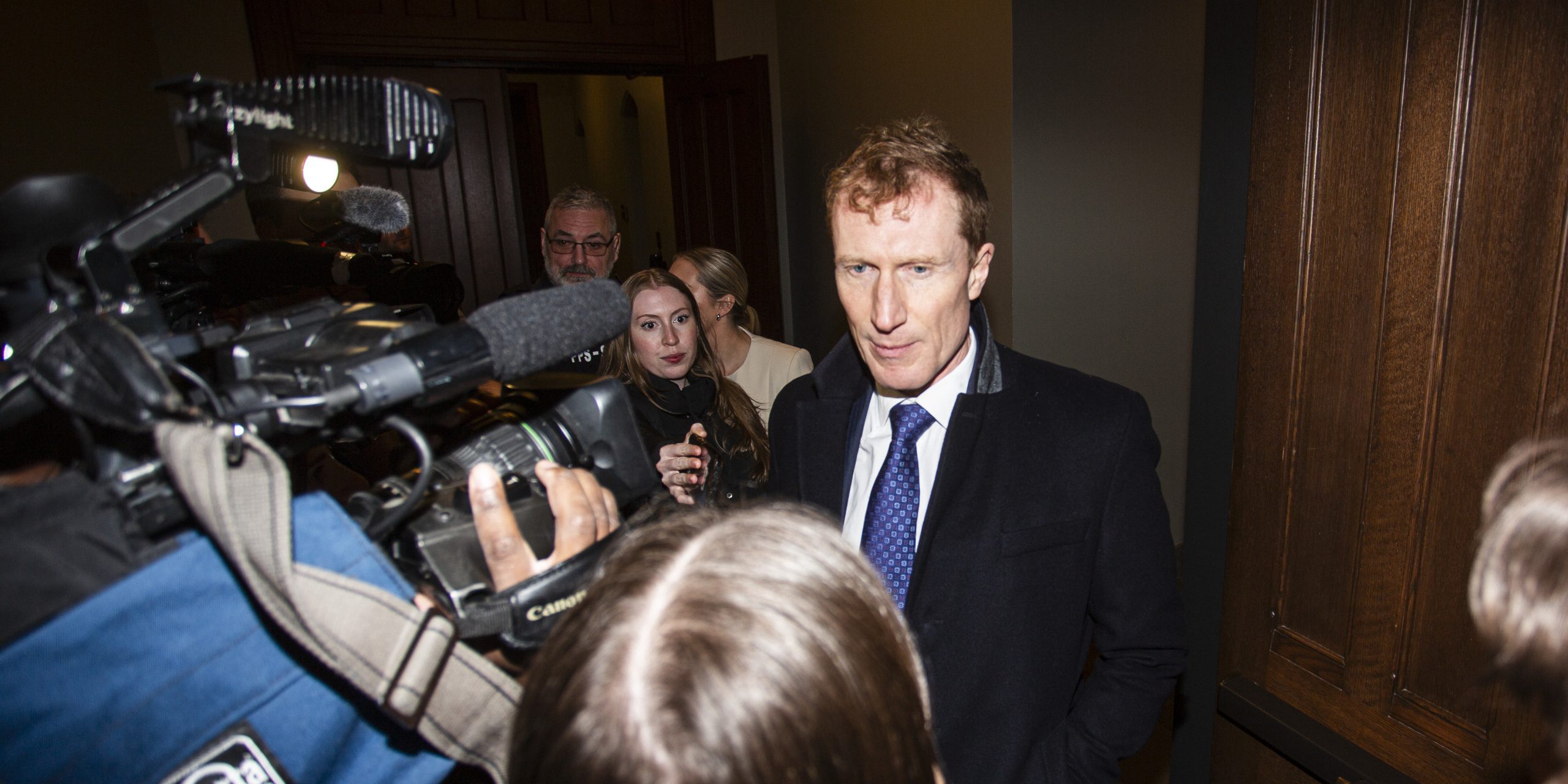
Canadian Identity Minister Marc Miller scrums with reporters outside the Liberal Party winter caucus retreat in West Block on Jan. 23, 2025. The Hill Times photograph by Andrew Meade
Budget to include $600 million for culture, few details on distribution: source
Regulatory | |November 3, 2026
The Liberal government’s upcoming budget will include the $600 million investment in Canada’s cultural sector, but it will not outline how the money will be allocated, according to a source familiar with the matter.
The source, granted anonymity by The Wire Report to speak freely, said cultural stakeholders have been told $600 million will be “committed” in Budget 2026, but the industry shouldn’t expect additional details regarding distribution and recipients.
In June, Canadian Identity Minister Marc Miller (Ville-Marie—Le Sud-Ouest—Île-des-Sœurs, Que.) promised $600 million in stopgap funding for the domestic cultural sector. The announcement came after Ottawa asked the CRTC to review its decision requiring U.S. streamers to earmark a certain portion of Canadian revenues to funding Cancon, which was expected to generate billions for the domestic cultural ecosystem.
The Liberals framed the $600 million as short-term relief for a cultural sector that had been awaiting court decisions on the legality of mandated streamer contributions for Cancon. However, five months later, organizations are still waiting for the investment to be doled out.
The budget, which will be the second annual economic plan tabled by Prime Minister Mark Carney’s (Nepean, Ont.) government, is set to be unveiled on Thursday.
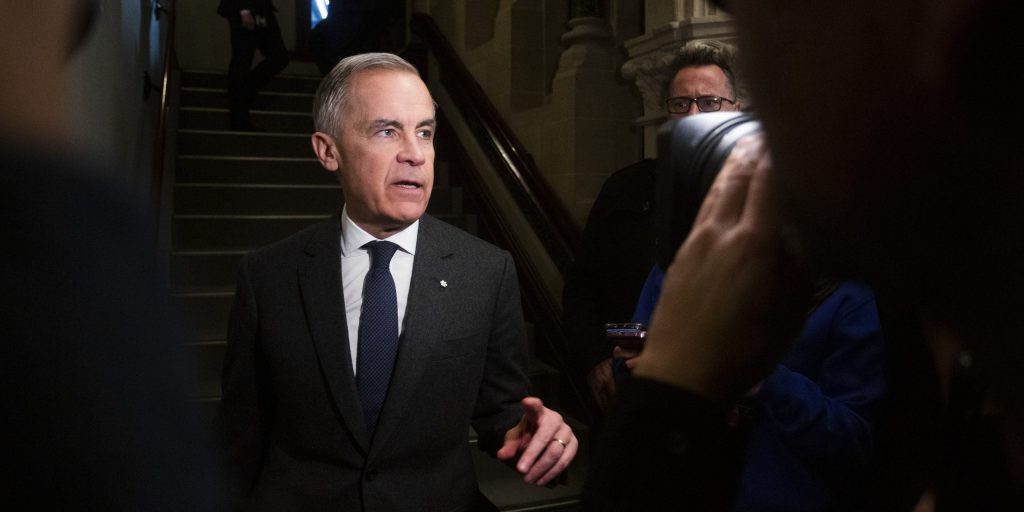
In October, Miller said during Question Period the funds would be dispersed “very quickly,” without providing additional details. Meanwhile, when asked about the possibility of the $600 million being included in the budget, Finance Minister François-Philippe Champagne (Saint-Maurice—Champlain, Que.) said Budget 2026 will “address the priorities of Canadians.”
“I can tell you that we have always been key allies to the cultural and arts sectors — celebrating who we are as Canadians and as Quebecers, in our official languages,” Champagne told reporters in French.
“The cultural sector can count on us. We have always been strong allies.”
The source did not confirm whether the $600 million would be made permanent in the upcoming budget, though Miller’s office has previously said the investment would be annual.
John Fragos, a spokesperson for Champagne, told The Wire Report the government doesn’t “speculate on what the budget may or may not contain.”
“You’ll have to wait until Nov. 5.”
Previous reports have suggested $400 million worth of funding will be allocated for the audiovisual sector, with the Canada Media Fund, Independent Local News Fund, and the Certified Independent Production Funds supposedly slated to receive a portion. However, of that $400 million, $267 million remains unallocated. It is also unclear how the remaining $200 million, designated for the audio sector, will be designated.
The source could not confirm the previous allocation reports and emphasized that stakeholders have been told specific details will not be outlined in the budget, though they’re likely to be announced in the near future.
The Bloc Québécois have been among the most vocal critics of Ottawa’s approach to cultural policy, as the sovereigntists have called for the budget to include payments for funding groups and asked for the CRTC-mandated requirements for streamers to be reinstated.
When reached by The Wire Report, Bloc MP Martin Champoux (Drummond, Que.), the party’s heritage critic, said “the promised $600 million in compensation must be paid out, and the CRTC’s decision must be upheld, ensuring that American companies pay their fair share moving forward.”
Reynolds Mastin, CEO of the Canadian Media Producers Association, said in an interview he’s focused on how the budget handles the $600 million investment, but also the “timing of the funding.”
“There have been very clear signals sent from the government that it will be confirming the $600 million in the budget,” he said. “We and a number of other domestic industry stakeholders have been urging the government to ensure that at least part of that funding is going to flow in this fiscal year.”
“We are hopeful that the government has heard us on the need and the urgency of having this funding flow quickly once it’s been announced in the budget.”
Advocates hopeful for CBC mandate review, tax credit expansion
Other industry players are watching the budget for other cultural measures, including the possibility of longer-term funding and an updated mandate for the CBC.
“Our main priority for the CBC is to provide it with an initial $150 million in permanent annual base funding,” said Sébastien Higgins, director of communications for the advocacy group Friends of Canadian Media, in an interview. “We also welcome a mandate review that would hopefully happen next year, and would really take the CBC into the 21st century.”
The CBC’s mandate has been untouched since 1991, though the Liberals promised to “strengthen” the Crown corporation’s mandate in its 2025 election platform by reworking the public broadcaster’s governance model, bolstering local news coverage, and adding a clear commitment to the inclusion of Indigenous perspectives.
“We know the government has a lot of priorities on their plate right now,” added Higgins.
“We can’t predict the future, but we’re confident this falls within their mandate, falls within what they promised to Canadians.”
Higgins is also hoping for a revamped policy direction for the CRTC to encourage anti-siphoning measures that would ensure certain sporting and cultural events are available through free-to-air broadcasting. He is also looking for a reinstated news subscription tax credit that would allow more Canadians to pay for print and digital news journalism.
Friends of Canadian Media is also among the proponents of extending the journalism labour tax credit to broadcasters, which is the main priority for Kevin Desjardins, CEO of the Canadian Association of Broadcasters.
Currently, the labour tax credit only applies to the production of written news content, and it allows outlets to claim 35 per cent of a journalist’s salary or hourly wages to a maximum of $29,750 per employee until the end of the calendar year, at which time the tax credit will fall back to 25 per cent.
In its spring economic update, the Liberals committed to exploring the possibility of expanding the tax credit to radio and television journalists, and Ottawa held a consultation over the summer to receive feedback from stakeholders.
“We’re optimistic the labour tax credit will be in this budget,” Desjardins told The Wire Report. “We’re just waiting to see what the specific details are and how broadcasters are brought in as they’re made eligible.”
“Given the announcement in this spring economic update and the ensuing processes, we feel like all signs point to it being in the budget.”